
How North Dakota Is Building the Future of BVLOS Drone Operations
Inside Vantis, a program of the Northern Plains UAS Test Site, and the partnerships and infrastructure creating a blueprint for the next generation of enterprise drone operations.
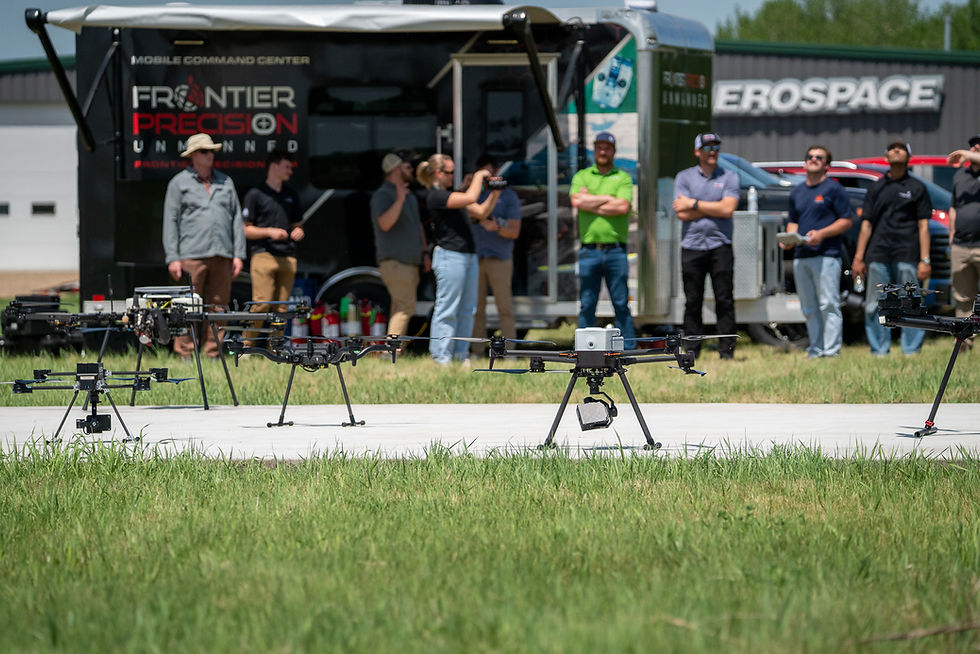
For years, Beyond Visual Line of Sight (BVLOS) operations have represented one of the commercial drone industry's biggest opportunities. Aircraft continue to fly farther, carry more, and perform increasingly complex missions. Yet routine BVLOS operations have remained relatively uncommon.
After spending time speaking with the people helping shape North Dakota's approach to BVLOS, it became clear that the aircraft themselves are only part of the story.
Much of the conversation around drones tends to focus on the platform. Which aircraft is best? How long can it fly? What payload can it carry? Those questions matter, but they overlook a larger challenge. Once an aircraft leaves the pilot's line of sight, the conversation shifts from hardware to infrastructure. How do operators maintain awareness of the surrounding airspace? How do they communicate reliably over long distances? How do they integrate safely with other aircraft and build operations that can repeat day after day?
Those are the questions North Dakota has spent more than a decade trying to answer.
A Highway in the Sky
Hunter Hegel, UAS Operations Manager for Vantis, describes the system with a simple analogy:
"The easiest way that I like to tell people is that it's a highway in the sky for drones."
The comparison holds up the more time you spend with it. Highways didn't transform transportation because cars became faster. They transformed transportation because they created common infrastructure that let people and goods move safely and efficiently. Commercial aviation followed a similar path.
Aircraft technology evolved rapidly through the twentieth century, but it was radar, communications, navigation, and air traffic control that allowed aviation to mature into the system we rely on today. North Dakota believes commercial drones are approaching a similar point in their evolution.
That belief shaped both conversations behind this piece. Flight endurance and payload capacity matter, but for Collin Kemmesat, Unmanned Regional Sales
Manager at Frontier Precision, the bigger barriers lie elsewhere.
"The biggest barrier we first see is experience. Detect and avoid is obviously a large concern for folks, and honestly, radio range seems to be a big constraint."
Kemmesat described customers with very different goals: one wants to map a field without constantly monitoring the aircraft, another hopes to inspect dozens of miles of utility corridor in a single mission. Different applications, similar questions. How do we extend operations safely? How do we simplify the regulatory process? How do we move from occasional demonstrations to everyday operations?
None of that gets solved by a single aircraft manufacturer, software developer, or operator working alone. That idea has shaped Vantis from the beginning.
More Than a Decade of Development
It's easy to assume Vantis is a recent response to the growing interest in BVLOS. It isn't. According to Hegel, the foundation was laid nearly fifteen years ago through work with General Atomics, exploring whether radar and other surveillance technologies could safely replace the visual observers and chase aircraft traditionally required during long-range unmanned flights.
Those early demonstrations supported thousands of BVLOS flights involving large unmanned aircraft operating from Grand Forks Air Force Base, and they sparked a bigger idea.
Hegel recalled the thinking that helped move the concept toward commercial operations:
"If we did this with a large-scale UAS, there's no reason we can't bring those same concepts down to the commercial side of things."
That realization became the foundation for what would eventually become Vantis. Over the following years, the project grew from a proof of concept into a statewide operational network covering approximately 5,000 square miles, with plans to expand surveillance further through additional FAA radar integration. The mission evolved alongside it. "It's gone from a project," Hegel explained, "into a suite of services."
Vantis isn't simply a technology platform or a faster path to a BVLOS waiver. It brings together surveillance, communications, operational coordination, and regulatory support into a common operating environment that organizations can build on. The technology creates the foundation, but turning that foundation into successful operations takes partners who know how to integrate aircraft, validate workflows, and help customers move from capability to deployment. That's where Frontier Precision, a geospatial technology company, comes in.
Turning Infrastructure into Operations
Building infrastructure is one challenge. Helping organizations use it effectively is another. As Vantis matured, North Dakota recognized that operators needed more than network access. They needed practical guidance on selecting aircraft, integrating technology, navigating the regulatory process, and building workflows that could hold up under real-world use. That need led to the Champion Operator program.
Frontier Precision, a geospatial technology company, became Vantis' second Champion Operator earlier this year and secured an aircraft-agnostic FAA waiver allowing qualifying NDAA-compliant aircraft under 55 pounds to operate throughout the Vantis service volumes.
For Kemmesat, the designation wasn't about adding another service to Frontier's portfolio. It was a chance to solve one of the biggest barriers to BVLOS adoption. When Frontier first began working with the Northern Plains UAS Test Site and their Vantis system, many organizations were interested in the system but struggled to connect their aircraft and workflows to it. Rather than wait for someone else to solve the problem, Frontier worked with a software developer in Fargo to build an application that lets participating aircraft exchange telemetry with the Vantis system, giving operators and the network a shared understanding of what's happening during a mission.
That collaboration has since grown beyond software. Kemmesat said Frontier Precision does not want to be “another reseller that just spouts the specifications.”
"We want to be out there saying, 'We've pushed this thing to its max limitations, and we want to tell you about it.'"
That philosophy reflects a broader shift in the industry: organizations aren't just buying aircraft anymore. They want confidence that the aircraft, software, communications, and operational procedures will work together before they ever deploy in the field. The Champion Operator program builds that confidence through testing, validation, and hands-on experience.
A Framework Built Around Secure Aircraft
As Vantis expanded, another priority emerged alongside operational maturity: security. Participation in the network requires aircraft that align with NDAA requirements. "We have a strict rule with utilizing Vantis where it has to be aligned to NDAA requirements," Hegel explained.
That reflects a broader shift across federal, state, and local agencies evaluating the long-term security of their drone programs. North Dakota built secure aircraft into the foundation of its BVLOS strategy rather than treating compliance as a separate initiative, establishing a $9 million Drone Replacement Program to help agencies modernize their fleets.
Hegel said the program is already supporting agencies across the state:
"The state did award $9 million to facilitate those replacements. We've been working through that the past year, where we can enable about 33 different state agencies across North Dakota to upgrade their fleet."
Replacing an aircraft doesn't automatically create a successful drone program. Agencies still need training, operational support, implementation partners, and infrastructure capable of supporting advanced missions, which is why North Dakota is addressing those elements together rather than separately. Kemmesat sees the same shift among Frontier's customers: some are just beginning their drone programs, others are preparing for a future where BVLOS is routine, but most are already asking how today's decisions will support tomorrow's capabilities.

An Ecosystem Taking Shape
Vantis provides the operational framework. Champion Operators help organizations implement and validate it. Manufacturers provide secure aircraft capable of supporting increasingly complex missions. Inspired Flight is one example of how those pieces come together: through Frontier Precision, aircraft such as the IF800 and IF1200 are already being evaluated and flown within the Vantis ecosystem, giving operators a way to pair NDAA-compliant aircraft with the infrastructure needed for advanced operations.
"We're pushing into a new era, doing things that we didn't think were possible years ago," Kemmesat said.
That progress, he explained, comes from continually testing new ideas, learning from real-world operations, and building on those experiences.
A Model Worth Watching
Vantis was built for North Dakota, but the challenges it addresses, detect and avoid, communications range, regulatory complexity, fleet security, are shared by public safety agencies, utilities, transportation departments, and critical infrastructure operators across the country. There isn't a single roadmap for solving them. North Dakota's approach offers a practical example of what happens when infrastructure, industry, and government build those solutions together instead of separately.
That shift is changing how the industry differentiates itself. For years, manufacturers competed primarily on flight time, payload, speed, and endurance. Those capabilities still matter, but operators are asking broader questions now: How easily does an aircraft integrate into existing workflows? Can it support secure operations? Will it keep meeting evolving regulatory requirements? Can it operate within larger operational ecosystems as those become more common? Aircraft like the IF800 and IF1200 reflect that evolution, serving not just as capable flight platforms but as one part of a larger framework that includes software, communications, payload integrations, and implementation partners.
Neither Hegel nor Kemmesat described a finish line. They described an industry that keeps evolving through collaboration, testing, and incremental improvement, where new capabilities and integrations continue to be shaped by real operational experience. Commercial aviation didn't become a part of everyday life because aircraft alone improved. It matured because an entire ecosystem grew around them, creating the confidence, procedures, and infrastructure needed for routine operations. The commercial drone industry appears to be following the same path, and Vantis may end up being remembered less for what it proved possible in North Dakota and more for the framework it offered the rest of the industry to build on.


